Learn with me.
Self Psychology: Origins, Transformations, and Clinical Life
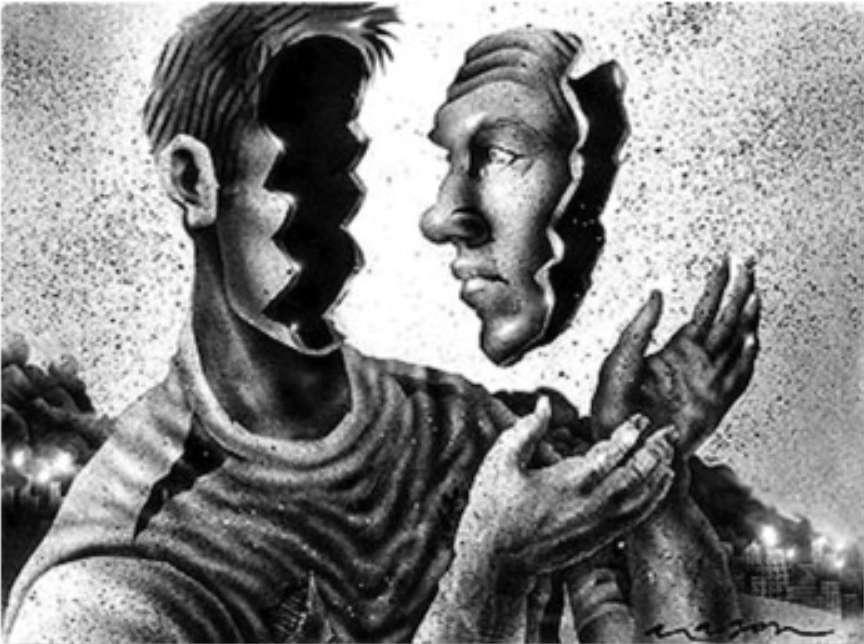
At the center of Kohut's revolution was a deceptively simple claim: that the self, not drives, is the proper subject of psychoanalytic inquiry. Steeped in the classical tradition, he dared to move human relationship to the center of development, psychopathology, and cure. It was a quiet revolution whose reverberations continue to shape contemporary psychoanalytic thought.
Sustaining What We Cannot Resolve: Ambivalence as a Meeting of Internal Solitudes in Fascist Times
"We are, above all, ambivalent animals: wherever we hate we love, wherever we love we hate." —Adam Phillips
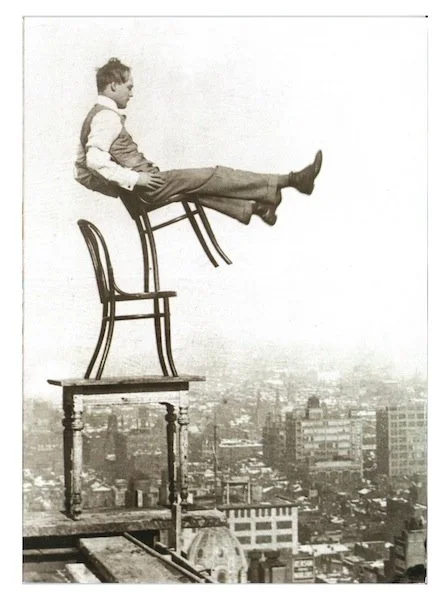
A patient arrives describing her week: rage at the news followed by three days in bed; her vital protest in sudden retreat and her hatred for complicity is swallowed by complete exhaustion. She is ashamed. Not of any particular feeling, but of the rhythm itself. She experiences this oscillation as failure, as proof she cannot sustain what this moment demands. What she has internalized is fascism's intolerance for ambivalence. Adam Phillips argues that "aliveness" depends on "the vitalizing effects of conflict." This, he believes, is the antidote to giving up. But what happens when conflict itself becomes unbearable? Christopher Bollas describes "the fascist state of mind" as one that tries to "empty the mind of all opposition" through "simplifying violence." The fascist cannot tolerate conflict's give-and-take but is enthralled by war's annihilation.

On Not Knowing What You Want: Adam Phillips and the Psychoanalytic Imagination
Adam Phillips writes about psychoanalysis the way psychoanalysis is supposed to work — slant, unsettling, arriving somewhere you didn't expect. His subject is ordinary life: what we want and can't have, what we avoid and can't name, the selves we might have been and didn't become. He is interested in ambivalence not as a problem to resolve but as the very texture of being alive.
This course takes Phillips seriously as both a clinical thinker and a literary one — because for Phillips, the two are inseparable. Drawing broadly across his essays and books, we will examine his rereadings of desire, frustration, boredom, and loss; his insistence on the value of not-knowing; his skepticism toward cure and his complicated tenderness toward the patient who wants to be fixed. Throughout, we will ask what his ideas demand of the clinician who takes them up: what kind of presence, what kind of listening, what kind of willingness to stay in the unresolved.
For advanced clinicians, Phillips is less a theorist to master than a sensibility to reckon with — one that asks whether psychoanalysis can resist its own temptation toward coherence, and what becomes possible when it does.
Self Psychology: Origins, Transformations, and Clinical Life
At the center of Kohut's revolution was a deceptively simple claim: that the self, not drives, is the proper subject of psychoanalytic inquiry. Steeped in the classical tradition, he dared to move human relationship to the center of development, psychopathology, and cure. It was a quiet revolution whose reverberations continue to shape contemporary psychoanalytic thought.

Between Divine Authority and Emerging Selfhood: A Clinical Training on Evangelical Trauma
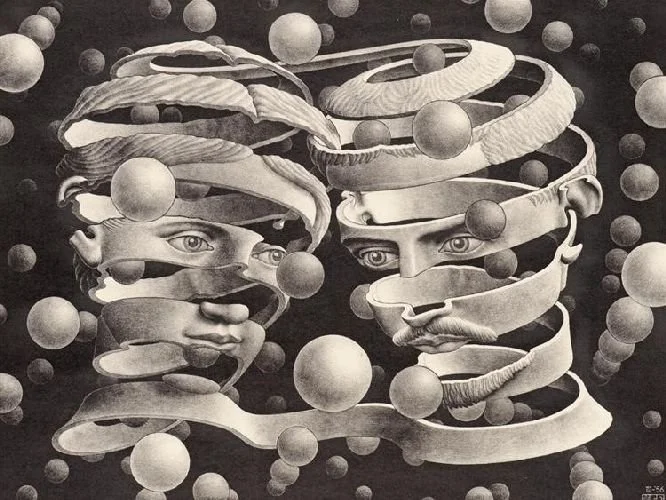
A brilliant young student sits frozen before a blank page. Their mind soars through theological paradoxes with ease, yet their thoughts refuse the permanence of paper—blooming like psychic skywriting only to vanish rather than risk choosing between their own voice and the voices that shaped them.
This clinical case, viewed through Dr. Jason Jost's framework of evangelical trauma, reveals a hidden therapeutic challenge. Children raised under the unblinking gaze of absolute truth learn to hide their authentic selves, even from themselves. Like this student whose ideas appear and dissolve rather than demand permanence, they develop sophisticated defenses against the dangerous act of self-assertion.
The case illuminates how psychoanalysts unfamiliar with evangelical child-rearing may unknowingly replicate these accommodation patterns—becoming another transcendent authority the patient must please. Drawing from Jost's insights and Peter Shabad's work on human agency, this training explores how therapeutic dynamics can mirror the original family system where emerging selfhood was consistently subordinated to divine will.
Participants will learn to recognize these patterns and develop approaches that create space where the sacred and personal need not exist in opposition—helping patients like this student finally allow their beautiful thoughts to remain on the page.
Let’s work together